

Julius Wagner‑Jauregg(1857–1940)
He was an Austrian psychiatrist who changed the course of psychiatric history.
He discovered a treatment for general paresis (neurosyphilis), which was considered almost incurable at the time, and was awarded the Nobel Prize in Physiology or Medicine in 1927 for this achievement.
His method was quite shocking.
He deliberately infected patients with malaria.
It may sound insane today, but at the time, it was a medical revolution.
Life
Early Life
He was born in 1857 in the Austrian Empire (present-day Austria).
He studied medicine and later researched psychiatry at the University of Vienna.
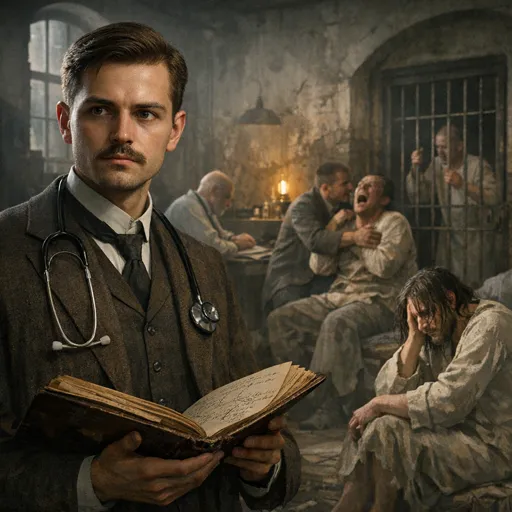
Psychiatric hospitals in the 19th century were essentially hell.
The causes of mental illness were unknown.
There were almost no effective treatments.
Patients were often confined for life.
Amid this environment, he began to notice a certain phenomenon.
Strange Observation
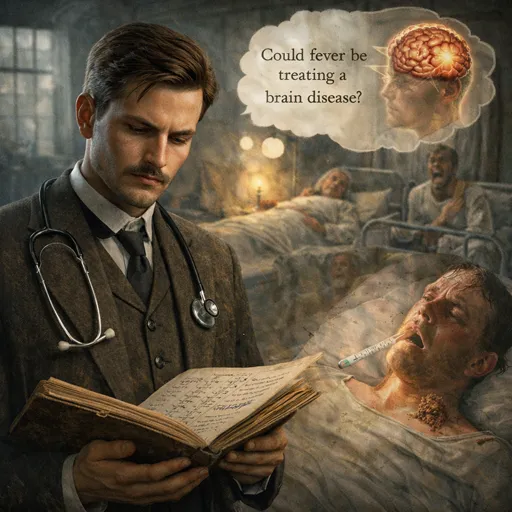
While examining the medical records of psychiatric patients, he noticed something unusual.
Patients who developed high fevers sometimes showed temporary recovery.
For example,
・after infections,
・after high fevers,
・after episodes of intense heat,
there were cases where psychiatric symptoms improved.
He began to think:
“Could high fever be curing diseases of the brain?”
From this point, a bold experiment began.
Malaria Therapy
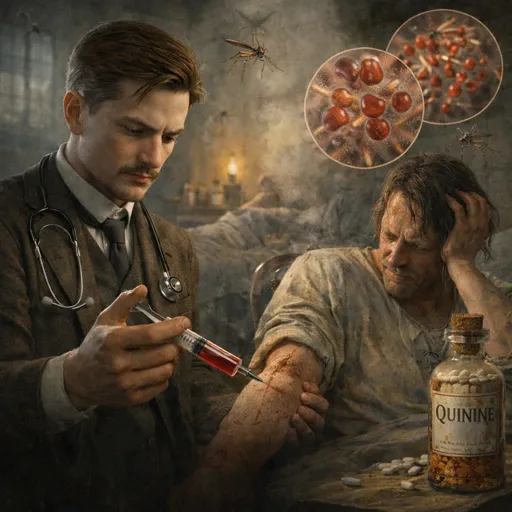
His treatment worked as follows:
- He deliberately infected patients with malaria.
- He induced high fevers.
- Then, he treated the malaria with medication.
At the time, malaria already had a known treatment (quinine).
In other words,
He used malaria as a “controllable fever-inducing tool.”
Why Did It Work
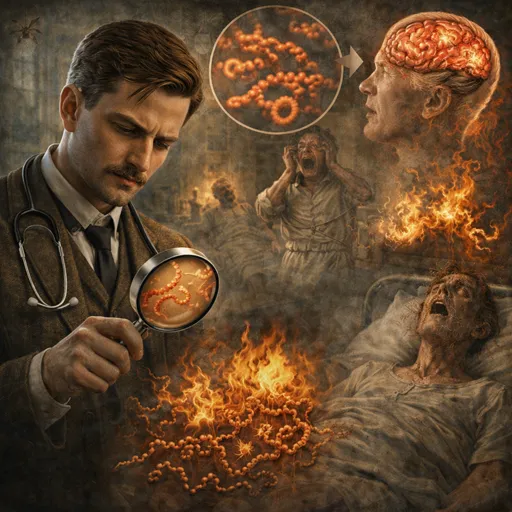
At the time, many cases of mental illness were actually caused by syphilis infecting the brain.
This condition is known as neurosyphilis (general paresis).
Symptoms included:
- Delusions
- Violence
- Memory loss
- Paralysis
- And ultimately, death
However, the bacteria that cause syphilis are sensitive to heat.
Therefore, it is believed that:
High fever → Weakens the bacteria
This was the mechanism behind the treatment.
Results
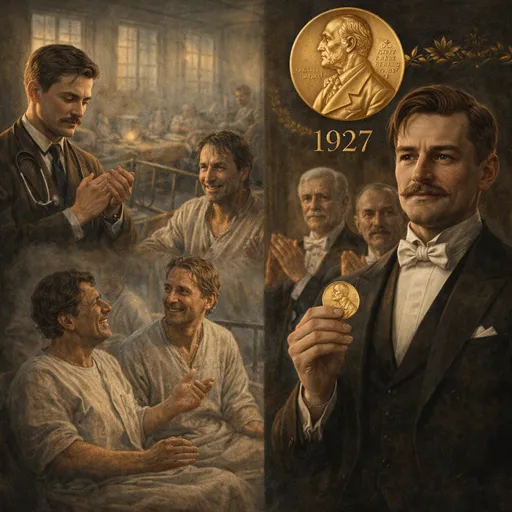
As a result of malaria therapy,
about 30% of patients improved at the time.
This was considered a near-miraculous level of effectiveness.
As a result,
he was awarded the Nobel Prize in 1927.
It became one of the first major successful treatments in the history of psychiatry.
However, there were also serious problems.
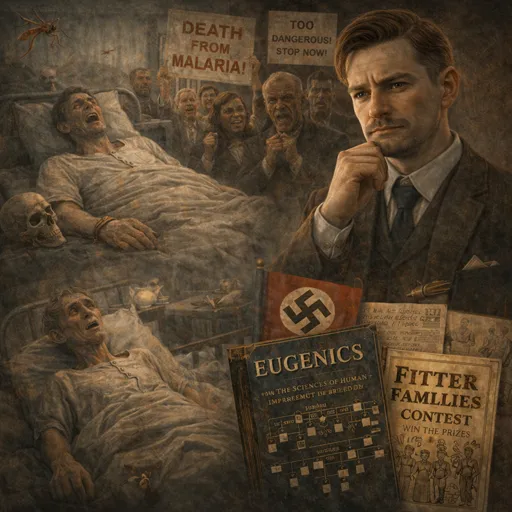
To be honest, his method was quite dangerous.
Side effects included:
- Death from malaria
- Severe complications
- Forced treatment
It was later heavily criticized.
He was also known to support eugenics.
While this was not uncommon in Europe at the time, it is strongly condemned today.
Afterward
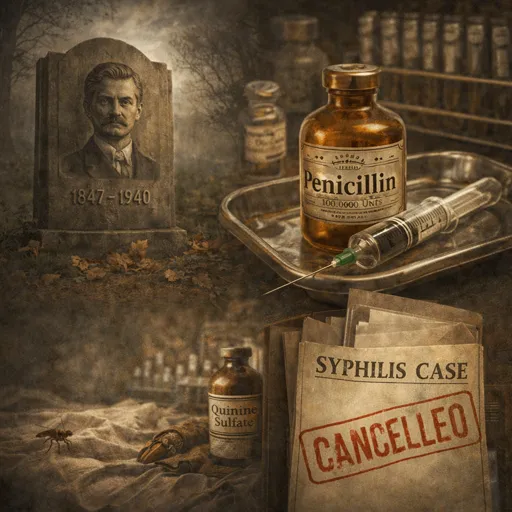
He died in 1940.
However, advances in medicine soon changed everything.
In the 1940s, penicillin was introduced.
Syphilis became easily treatable, and malaria therapy disappeared completely.
Historical Evaluation
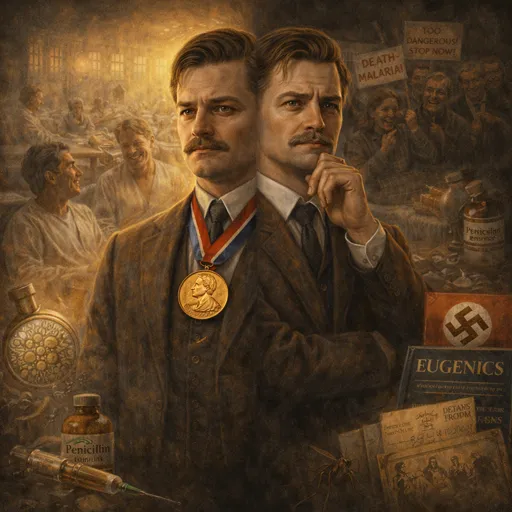
Wagner-Jauregg is often described as both a hero and a dangerous physician.
Reasons:
Achievements
- The first effective treatment in psychiatry
- Demonstrated the link between infectious disease and mental illness
Problems
- An extremely dangerous treatment
- Support for eugenics
In other words,
He is a symbolic figure of the early era of modern medicine.
Interesting Fact
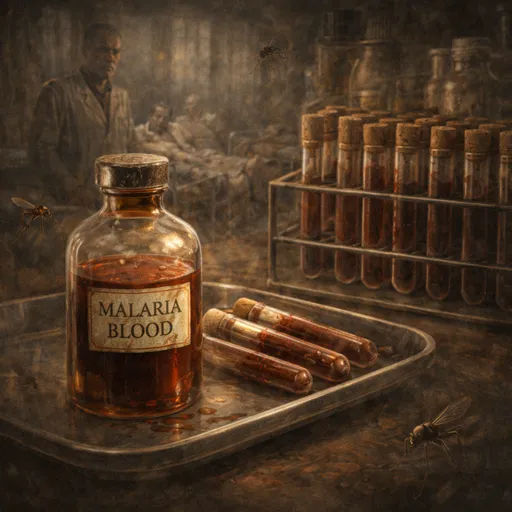
In psychiatric hospitals at the time,
Blood from malaria patients was stored.
The reason was
to infect new patients.
In other words,
There was a “malaria supply source” inside the hospital.
Syphilis Was an Extremely Common Infectious Disease at the Time

First, the premise.
From the 15th century onward, syphilis was a pandemic-level disease in Europe.
Cause
→ Syphilis
Characteristics
- Transmitted through sexual contact
- Progresses over decades
- No effective treatment (until the discovery of penicillin)
In other words,
Once infected, you carried a ticking time bomb for life.
Syphilis Ultimately Destroys the Brain

Syphilis progresses in stages.
Primary stage
Ulcers appear at the site of infection
Secondary stage
Rash and systemic symptoms
Latent stage
Symptoms disappear
(this is the frightening part)
Then, years to decades later…
Tertiary stage
Organ damage
One of the most well-known forms is:
→ Neurosyphilis
In this stage, the brain is affected.
Symptoms of Neurosyphilis
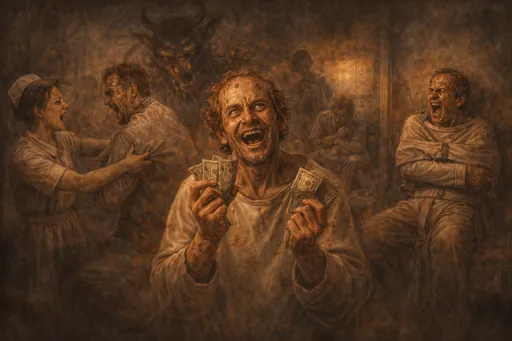
This is essentially a full-blown psychiatric condition.
Symptoms include:
- Delusions
- Hallucinations
- Violence
- Personality changes
- Memory impairment
- Breakdown of judgment
- Paralysis
One of the most well-known forms is:
General paresis
Patients may show:
- Grandiose delusions
- Abnormal euphoria
- Anger
In other words,
It was a condition that typically required institutional care.
Around 30% of Psychiatric Patients Had Syphilis
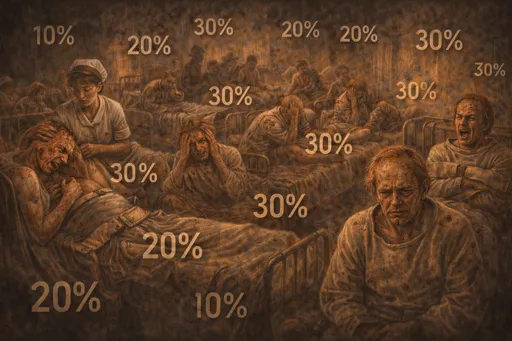
In the late 19th to early 20th century,
Studies of psychiatric hospitals revealed that
10–30% of hospitalized patients had neurosyphilis.
In other words,
a significant portion of psychiatric patients
were actually suffering from an infectious disease.
Syphilis Was Extremely Widespread
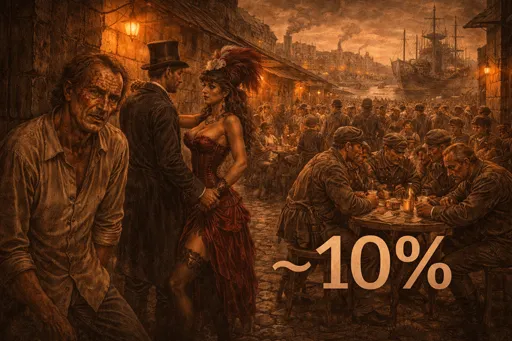
At the time,
- no contraception
- no sex education
- no antibiotics
On top of that, with increasing urbanization,
It spread rapidly through
- prostitution,
- soldiers,
- port cities.
For example,
In 19th-century Europe,
It is estimated that around 10% of adult men were infected.
Many Famous Figures Were Also Infected

At the time, the disease had spread throughout society, so many well-known figures were affected.
Those suspected to have been infected include:
- Friedrich Nietzsche
- Al Capone
- Guy de Maupassant
Nietzsche, in particular,
suffered a mental collapse → and was left in a debilitated state.
It is believed that the cause was neurosyphilis.
Why Wagner’s Treatment Was Revolutionary
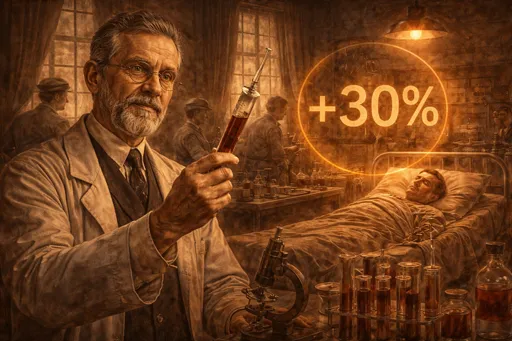
At this point, Julius Wagner-Jauregg enters the story.
At the time,
Neurosyphilis = almost certain death.
Then,
He introduced malaria therapy,
And about 30% of patients improved.
For that era,
This was a historic breakthrough.
The World Changed with the Arrival of Penicillin
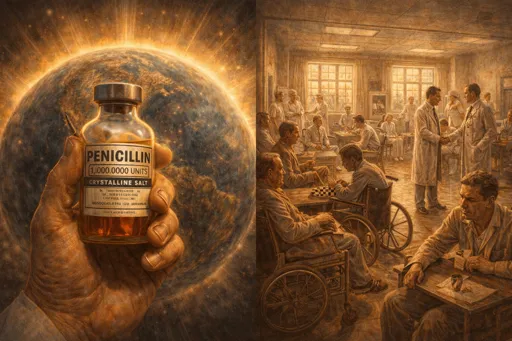
In the 1940s,
→ Penicillin
was introduced.
As a result:
- Syphilis became treatable
- Neurosyphilis drastically declined
- The composition of psychiatric hospital patients changed
In other words,
The landscape of psychiatry transformed almost overnight.
Interesting Historical Fact
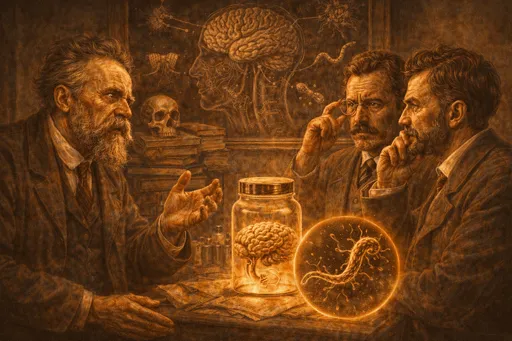
In the 19th century,
Many psychiatrists claimed that
“Mental illness is a disease of the brain,”
But they were not believed.
However,
syphilis proved it.
Some mental illnesses are caused by infection.
This was a revolution in psychiatry.
The story of
Julius Wagner‑Jauregg
begins here.
Prologue: Recognition and Consequence
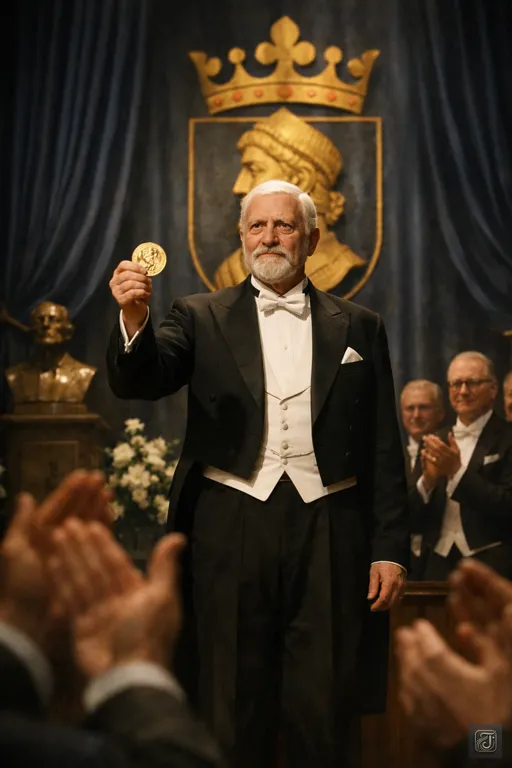
December 1927, Stockholm.
The Nobel Prize in Physiology or Medicine was awarded.
The recipient was
Julius Wagner-Jauregg.
His achievement is clearly recorded:
The establishment of fever therapy for general paresis.
General paresis is a disease caused by syphilis invading the brain.
Once it begins, personality disintegrates, speech falters, and death eventually follows.
From the late nineteenth century into the early twentieth century,
a significant number of patients confined to psychiatric hospitals suffered from this condition.
There was no treatment.
Sedation. Restraint. Observation.
There was nothing else.
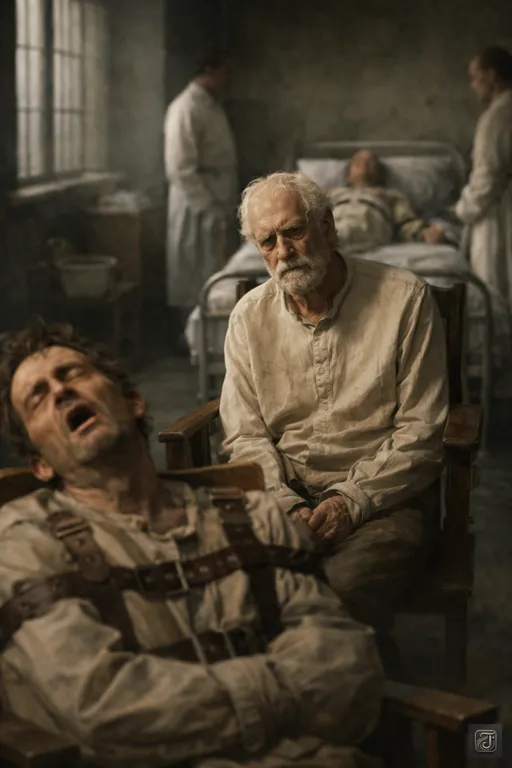
Wagner-Jauregg took notice of cases in which high fever temporarily improved the symptoms.
And he attempted a method.
“First, deliberately infect the patient with malaria and induce recurring high fevers.
The high fever from malaria will kill the syphilitic bacteria.
Afterward, administer quinine—the established treatment for malaria at the time—to cure the malaria.”
There was still no cure for syphilis,
but there was already a treatment for malaria.
Even so, it was a dangerous procedure.
Yet measurable improvements were observed in certain cases,
and statistical significance was reported.
Before the practical use of antibiotics,
This became the first treatment to demonstrate effectiveness against general paresis.
Reactions were divided.
Support and criticism coexisted.
Yet the results remained.
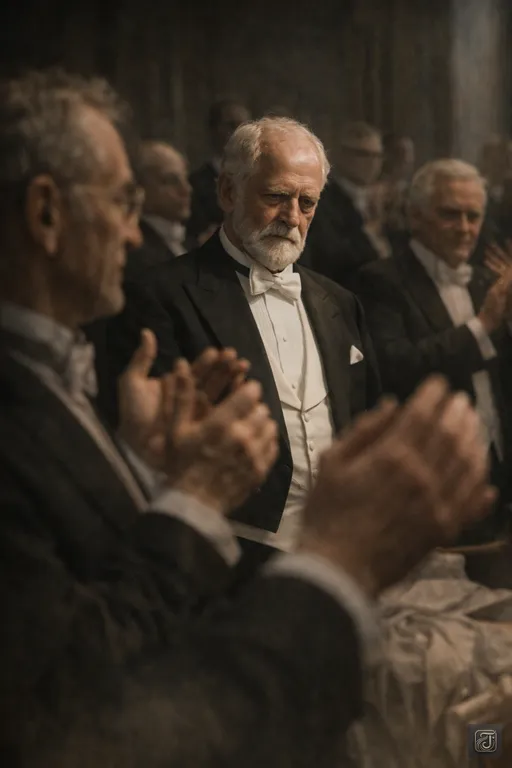
In 1927, that achievement received international recognition.
The sound of applause is not preserved in the record.
What remains are numbers, papers, and dates.
This story begins before those numbers were born.
Chapter 1: The Room Where Nothing Could Be Done
Vienna, 1900.
The winter morning was quiet.
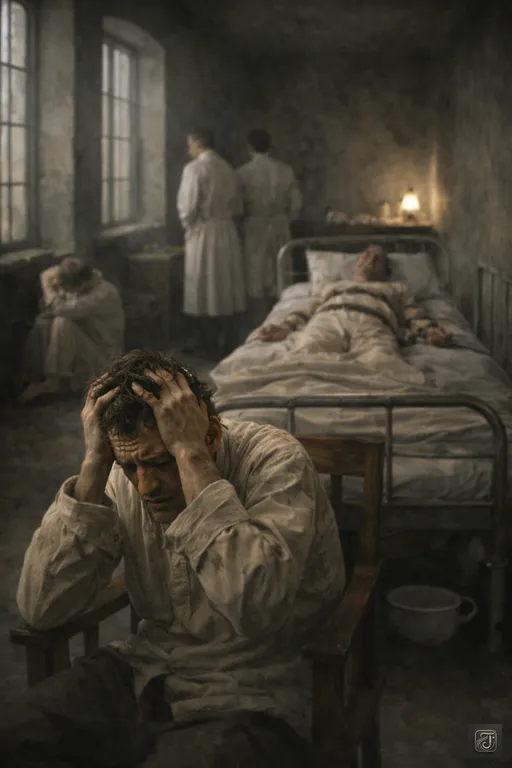
But the psychiatric ward was different.
From the far end of the corridor came a scream without meaning.
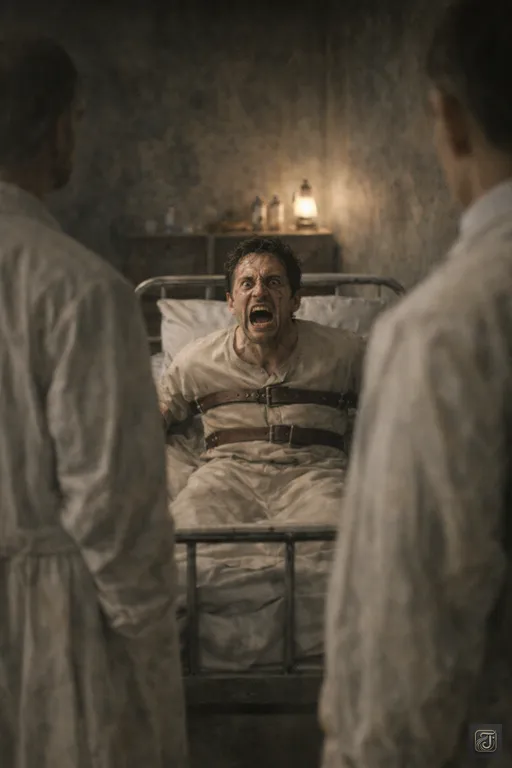
“I am the Emperor! Obey my command!”
He was a young man, in his early thirties. The records say he had once been a bank clerk.
Now he was strapped to a bed, his eyes burning with agitation.
The doctors were accustomed to it.
They did not even flinch.
The diagnosis: general paresis.
The result of syphilis reaching the brain.
A man who had been working normally only a few years earlier
was now ruled by grandiose delusions and trembling hands.
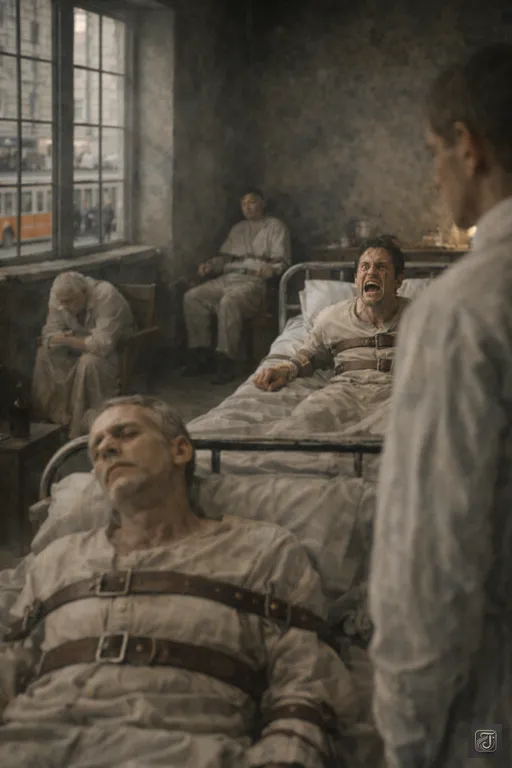
There were many patients like him in this ward.
A former teacher.
A former soldier.
A former merchant.
They shared one thing in common.
—They would not recover.
Once it began, within a few years the personality collapsed, the body deteriorated, and death followed.
There was no treatment.
Sedate them to sleep.
Restrain them if they raged.
Watch as they weakened.
That was all.
Outside the window, trams rattled past and people hurried to work.
But inside this building, time moved at a different speed.
In the afternoon, a young wife came to visit.
She called her husband’s name.
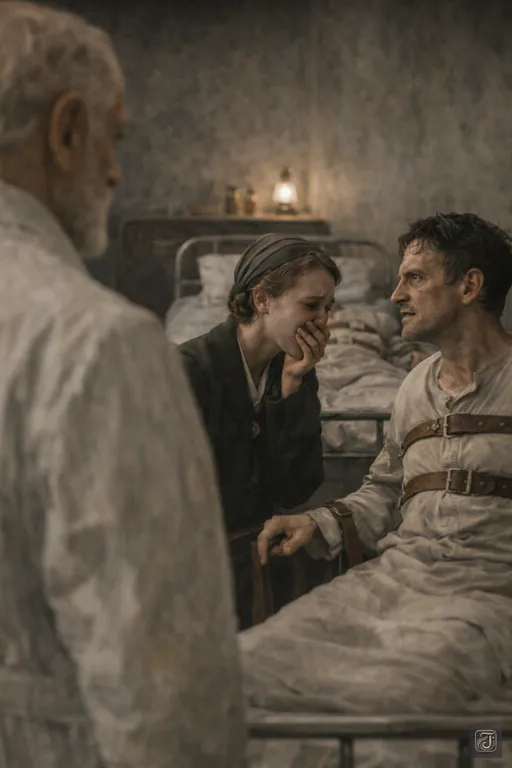
“Josef, it’s me. Elisabeth.”
The man did not look at her.
“Do not come closer, woman. I am handling matters of state secrecy.”
She stood there for a moment, frozen,
then began to weep quietly.
Wagner said nothing.
Words of comfort would have been hollow.
In the record book, the same words were written again that day.
Symptoms: persistent.
Delusions: severe.
Improvement: none.
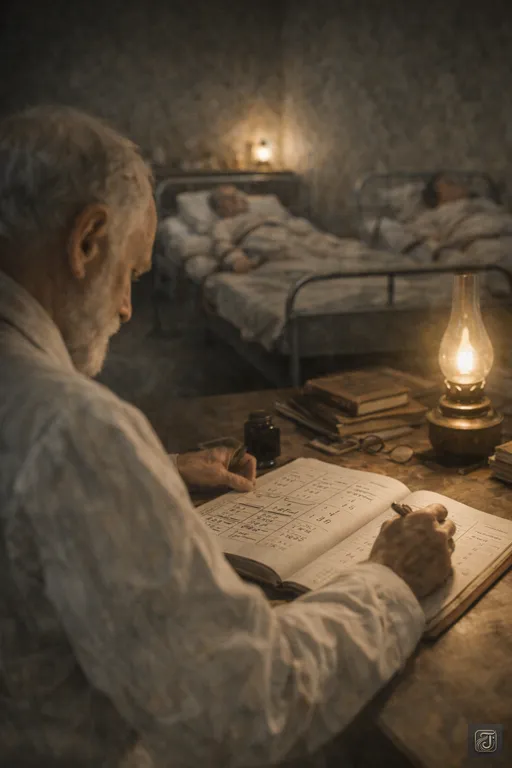
Evening.
The ward grows temporarily quiet.
The exhausted patients have fallen asleep.
Wagner sits at his desk, arranging numbers.
Age at onset.
Days since progression.
Time until death.
Statistics are calm.
They have no emotion.
Yet the statistics point to one undeniable fact.
This disease almost certainly takes a life.
Without a treatment, a physician is nothing more than a recorder of decline.
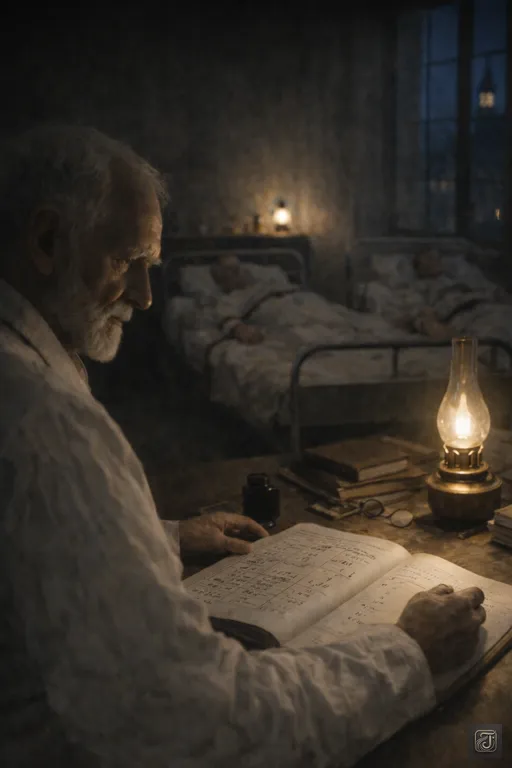
Outside the window, darkness has fallen.
In the distance, church bells begin to ring.
Wagner sets down his pen.
For the first time, he murmurs softly,
“Is there truly nothing we can do?”
No one hears the question.
But the air in the ward is already nearing its limit.
Chapter 2: The Hypothesis
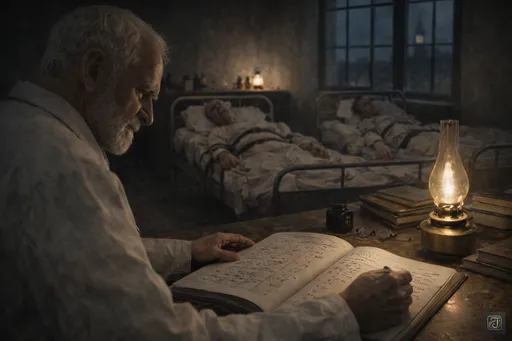
Winter passed, and spring arrived, but the air in the ward did not change.
The number of patients with general paresis continued to grow.
Three years after onset.
Four years.
Soon speech collapses, gait falters, the body weakens.
The statistics trace almost a straight line.
No improvement.
Death.
Wagner was rereading a record.
Several years earlier, in another ward, something had occurred by chance.
After an infection accompanied by high fever, a patient with general paresis had shown temporary improvement.
Only a few lines. An unremarkable entry.
At the time, it drew no attention.
Coincidence.
Misdiagnosis.
Wishful thinking.
That was how it had been dismissed.
But he drew a line beneath it.
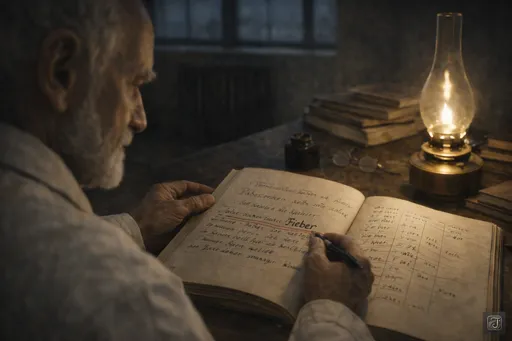
—High fever.
Could the syphilitic pathogen be vulnerable to heat?
There was no proof.
No experiment.
Only observation.
That afternoon, he raised the subject in the physicians’ room.
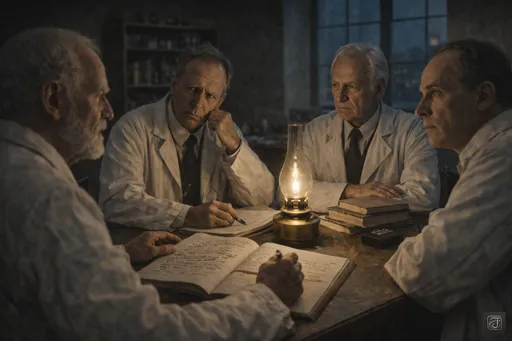
“There is a case in which symptoms lessened after a febrile illness.”
“Temporary illusion, most likely.”
“That is possible.”
“General paresis does not improve on its own.”
“Precisely why the exception is worth noticing.”
Silence.
Outside the window, students crossed the courtyard.
The university grounds were bright.
Inside the physicians’ room, the air was heavy.
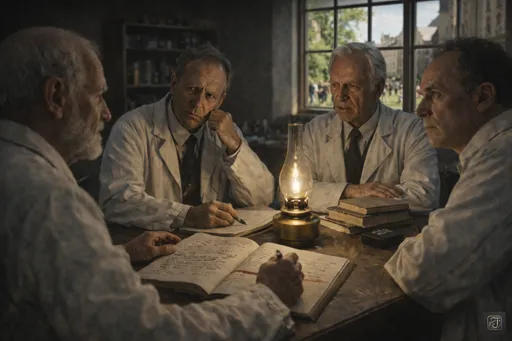
“Suppose,”
“Suppose high fever does have an effect. How would you deliberately induce it?”
No one answered.
A common cold would not suffice.
Pneumonia would be too dangerous.
An infection that produces fever,
yet already has an established treatment.
There was only one disease that met those conditions.
No one spoke its name.
Wagner did.
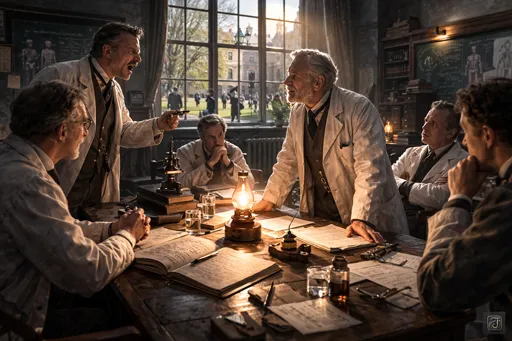
“Malaria.”
“Are you out of your mind? Do you intend to kill the patient?
They’ll simply die of malaria instead!”
“That possibility exists,” Wagner replied calmly.
“But its mortality rate is lower than that of syphilis.
And if we do nothing, they will die regardless.”
“You would deliberately infect a patient with another disease? Is that permissible?”
“Then is there another method?”
No one answered.
In the record book, the same words appeared again that day.
Improvement: none.
In the silence, only the ticking of the clock could be heard.
The senior physician spoke slowly.
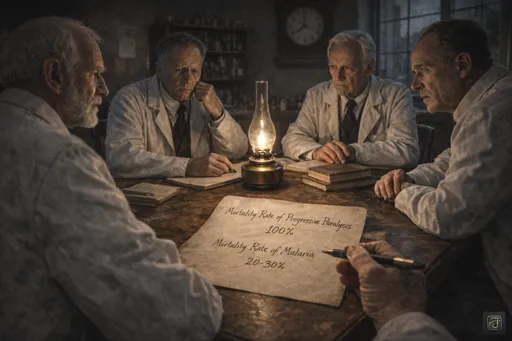
“Are there any successful cases?”
“Not yet.”
“Then it is an experiment.”
The word was not spoken lightly.
An experiment.
The subjects: patients deemed beyond saving.
And yet, deliberate infection.
On a sheet of paper on the desk, he wrote a simple calculation.
Mortality rate of general paresis.
Mortality rate of malaria.
Numbers are calm.
Ethics cannot be reduced to numbers.
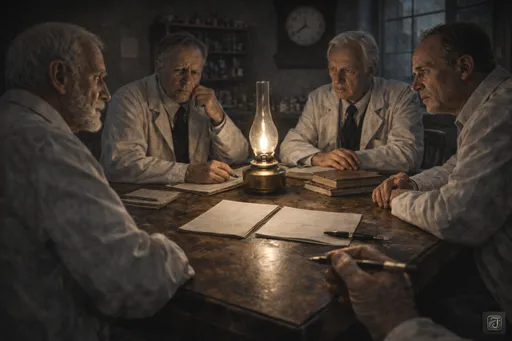
“If improvement is confirmed?”
“Then it becomes a treatment.”
“And if it fails?”
“Then it becomes a record.”
No one laughed.
That evening, Wagner walked through the ward once more.
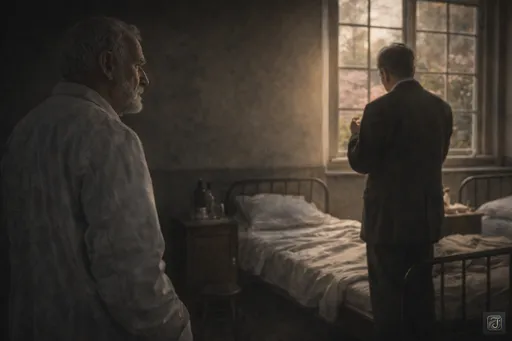
The thirty-two-year-old bank clerk was murmuring something to the wall.
The trembling in his hands had grown worse.
His back already looked smaller than before.
Wagner stopped.
If nothing were done, this man would certainly die.
That much was clear.
But to intervene carried a different meaning.
Spring light streamed in through the window.
Only inside the ward did the seasons seem suspended.
Quietly, he made his decision.
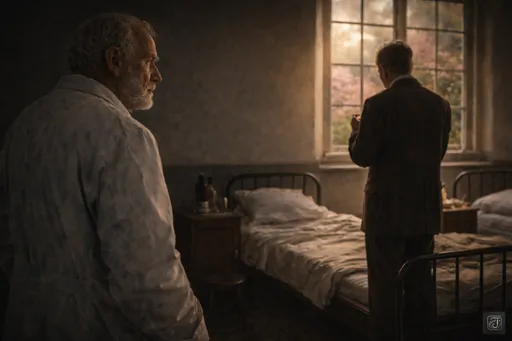
Continue observing.
Gather the records.
And, if necessary—
Borrow heat.
The decision was not yet written on paper.
But already, there was no turning back.
Chapter 3: The First Patient
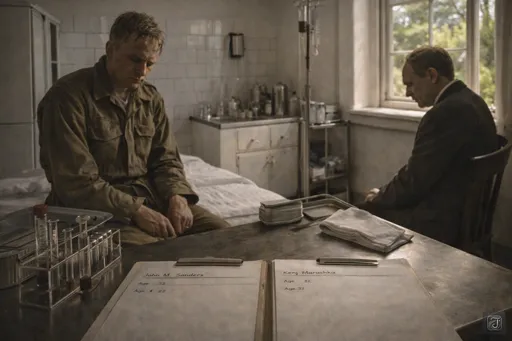
Early summer.
A malaria patient was transferred from a hospital on the outskirts of the city.
A young soldier, already suffering recurring fevers.
He would remain here for only a few days—long enough to draw blood.
The procedure room was austere.
White walls. Metal instruments. A window half open.
On the desk lay two medical charts.
One belonged to the soldier.
The other to the thirty-two-year-old bank clerk.
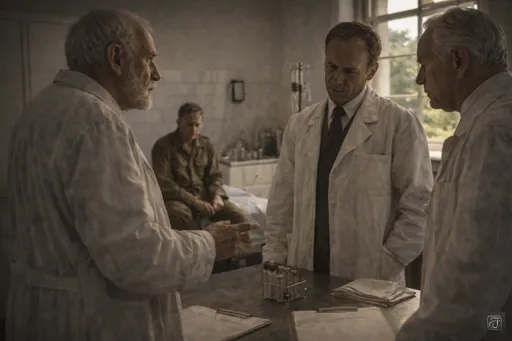
“Has it been explained?”
“The family has been informed.”
“And the patient?”
“Understanding cannot be expected.”
Silence.
In this ward, the concept of consent was ambiguous.
The bank clerk was seated in a chair.
Today, he was relatively calm.
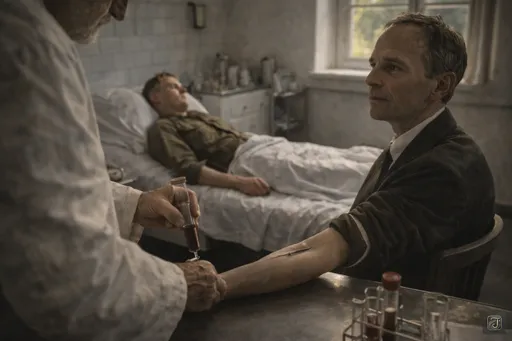
“Doctor.”
“Is this a new examination?”
“Yes.”
“I am an important man, so I am being treated specially, I presume.”
Wagner did not deny it.
“Would you extend your arm for me?”
The man obeyed.
Thin veins. A slight tremor.
On the adjacent table, the soldier lay still,
a sheen of fever-sweat on his forehead.
Blood was drawn.
Dark red filled the glass syringe.
No one spoke.
Only the ticking of the clock advanced.
The needle touched the bank clerk’s skin.
A momentary resistance.
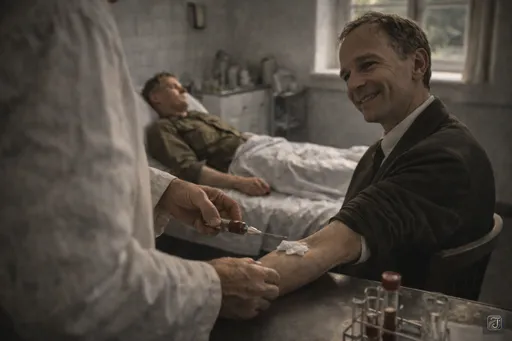
“Does it hurt?”
“A little.”
That was all.
The procedure was over quickly.
The man pressed his arm and gave a faint smile.
“So now my intellect will be proven, I assume.”
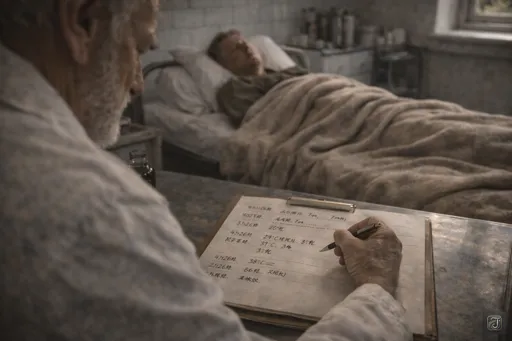
Wagner wrote in the chart.
Date.
Time.
Dose administered.
Observation begins.
The first change came the following day.
Chills.
An extra blanket was added.
Temperature: 38°C.
Second day.
39°C.
Sweating. Rapid pulse.
The man began to lose his composure.
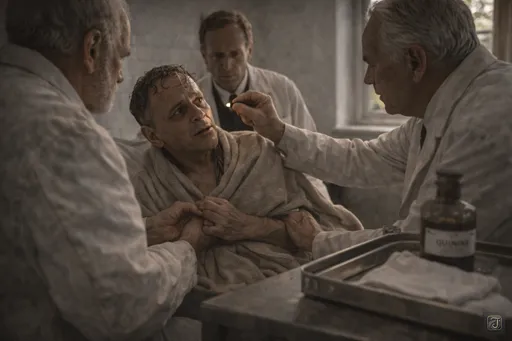
“I’m cold… no, hot…”
The trembling in his hands intensified.
Wagner measured his pulse and examined his pupils.
A colleague spoke in a low voice.
“Can we bring him back?”
“Quinine is prepared.”
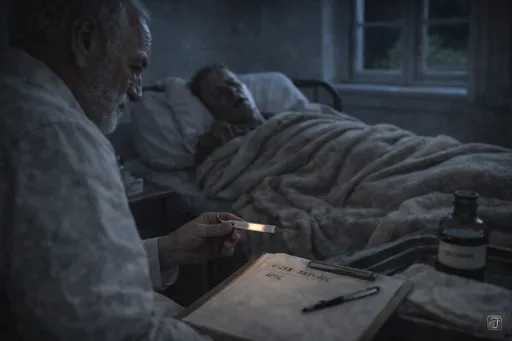
Third day.
40°C.
The fever rose in cycles, reaching its peak again and again.
The man muttered deliriously.
“Your Majesty… I…”
The words collapsed halfway through.
At night, the ward fell silent.
Wagner sat in a chair beside the bed, checking the thermometer.
The numbers rose, fell, and rose again.
He did not pray.
He simply recorded.
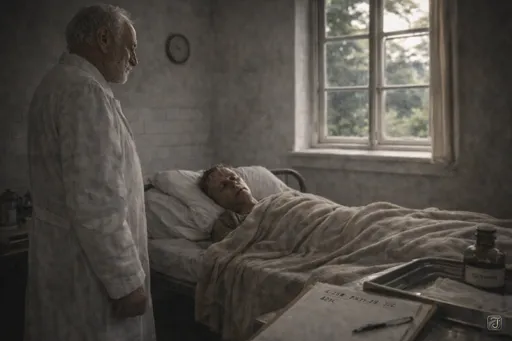
Fourth day.
The fever continued.
But at one moment, the man opened his eyes.
They were focused.
“…Doctor.”
His voice was hoarse.
“Where am I?”
Wagner froze.
“In a hospital.”
“Why am I here?”
The question was logical.
Not vague.
Wagner did not answer at once.
“Do you not remember?”
The man closed his eyes.
A long silence.
“…Did my wife come?”
The clock in the corridor marked time slowly.
Wagner stood quietly.
“The fever has not yet passed.”
That was all he said.
Outside, the summer light had grown stronger.
Through the window of the procedure room, distant trees could be seen swaying.
Was this improvement?
Coincidence?
A temporary stillness?
No one could yet know.
There was still ample space left in the margin of the chart.
Chapter 4: A Quiet Confirmation
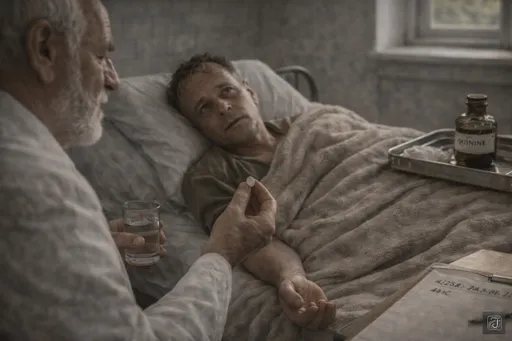
The fever passed its peak on the seventh day.
The cycles gradually weakened, and his temperature slowly began to fall.
Quinine was administered.
White tablets. Bitter.
The man swallowed them obediently.
The tremor remained.
But the movement of his eyes was different.
During morning rounds, Wagner took his usual seat.
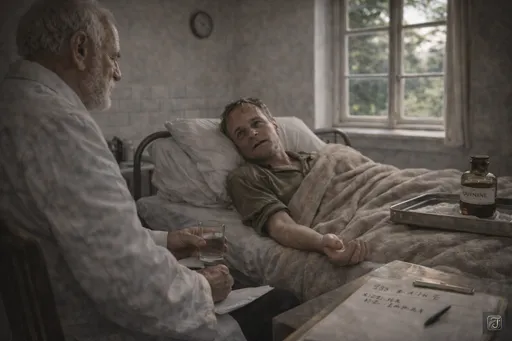
“Your name.”
“Josef Heinrich.”
The answer came at once.
“What day do you believe it is?”
The man paused to think.
“…Early June, perhaps.”
Not exact.
But different in quality from his earlier responses.
“And this place?”
“The university hospital.”
Wagner made a note in the chart.
Responses coherent.
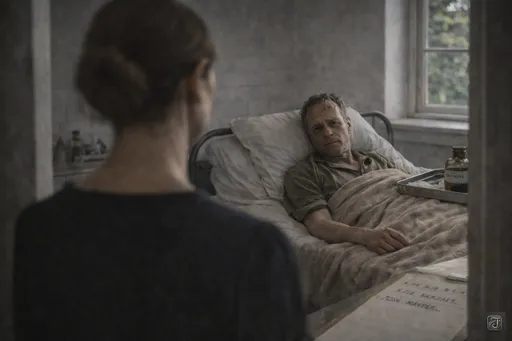
In the afternoon, his wife was summoned.
She seemed calmer than before.
She walked like someone who had prepared herself for what she might see.
She stopped at the doorway of the room.
“Please, come in.”
The man was sitting up against his pillow.
His face was gaunt.
His cheeks hollowed, shadows beneath his eyes.
But his gaze was steady.
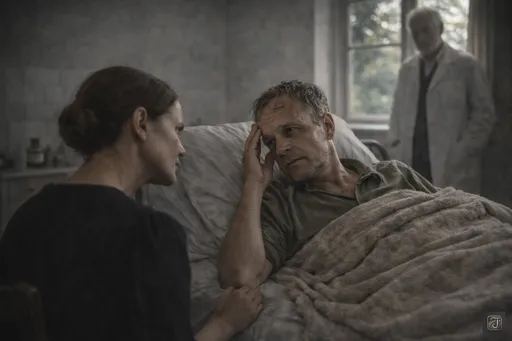
She stepped closer.
“Josef.”
The man looked at her.
A long silence.
“…Elisabeth.”
She caught her breath.
“You recognize me?”
“Of course.”
His voice was quiet.
“You’ve come often.”
She sat down in the chair.
She did not cry.
“You’ve grown thinner.”
He gave a faint, crooked smile.
“I feel as though I was dreaming for a long time.”
“What kind of dream?”
“I cannot quite remember.”
He pressed a hand to his temple.
“It felt as though I was doing something important… but I remember nothing.”
Wagner stood in the corner of the room, listening.
He did not intervene.
He observed.
She spoke again.
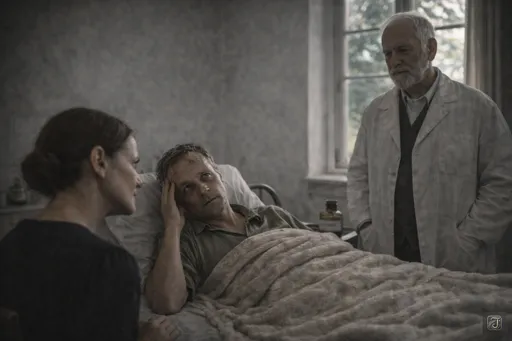
“Is he going to be all right now?”
Wagner answered.
“The symptoms have lessened.”
He did not make a definitive claim.
The man turned to Wagner.
“Doctor, what was I doing?”
Wagner paused before replying.
“You were unwell.”
“Did I cause trouble?”
“No.”
That was only half true.
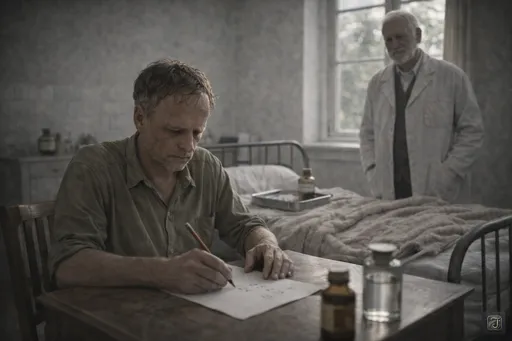
Several days later.
The delusions had not returned.
His speech was clear.
He could perform simple calculations.
It was not perfect.
But the speed of collapse had stopped.
A report was delivered in the physicians’ room.
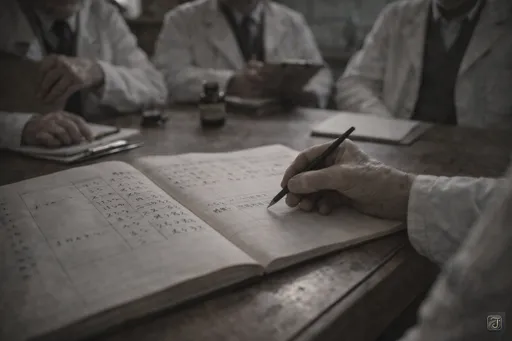
“It is only one case,”
“There is no guarantee it will last.”
“We continue to observe.”
More numbers were added.
After fever, symptoms reduced.
That single line stood out faintly in the record book.
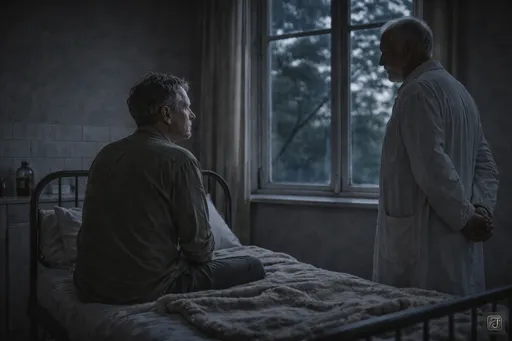
That evening, Wagner visited the room alone.
The man was looking out the window.
“What are you thinking about?”
“My work.”
“Do you wish to return?”
The man slowly shook his head.
“I am afraid.”
“Of what?”
“That I might break again.”
Wagner did not answer.
There was no guarantee.
“Doctor.”
“Yes?”
“Have I been saved?”
Outside, the wind stirred the trees.
Wagner replied briefly.
“For now.”
The man asked nothing further.
There was still space left in the margin of the chart.
But for the first time, that margin contained hope.
Chapter 5: The Record
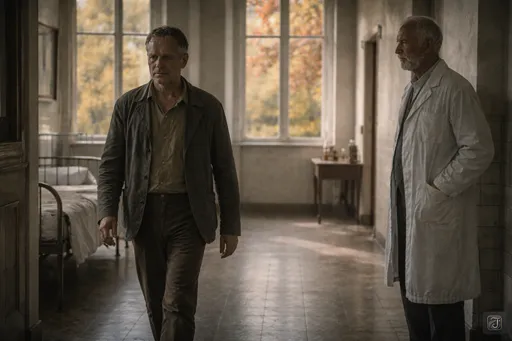
Autumn.
The trees visible from the ward windows had begun to change color.
Josef was granted discharge.
His gait was steady.
His speech natural.
A slight tremor remained in his hands, but not enough to disrupt daily life.
On the day of his discharge, his wife came to take him home.
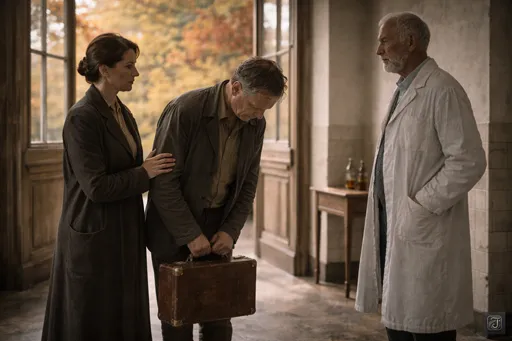
“Let’s go home.”
He gave a small nod.
There was little to carry.
“Doctor.”
Before leaving, he stood before Wagner.
“Am I completely cured?”
Wagner did not answer at once.
“At present, the symptoms have disappeared.”
“And recurrence?”
“It remains possible.”
The man accepted this quietly.
“Even so, can I return?”
“That depends on your effort.”
The man bowed deeply.
“Thank you.”
His voice was not emotional.
It sounded as though he were stating a fact.
The door closed.
Footsteps faded down the corridor.
Wagner opened the chart.

Final diagnosis:
Symptoms: remission.
He wrote the date.
Beneath it, he left a brief note.
Clear improvement observed following fever therapy.
That was all.
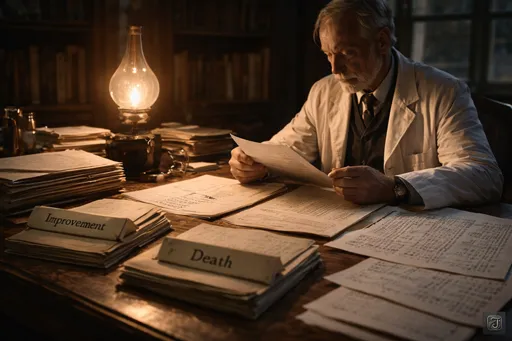
Several weeks later, the same procedure was carried out on another patient.
Not all improved.
There were cases in which patients could not withstand the high fever and died.
Those numbers were recorded as well.
Cases of improvement.
Cases of death.
They lay side by side on the desk.
Little by little, the statistics began to take shape.

Night.
Wagner remains alone in the laboratory.
Only the lamp illuminates the desk.
He takes out the first chart.
Thirty-two years old. Bank clerk.
Dose administered.
Highest temperature.
Course of progression.
The numbers are orderly.
But numbers ask no questions.
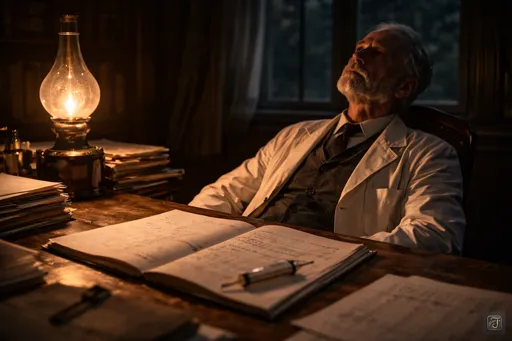
He leans back in his chair and looks at the ceiling.
He recalls the moment the needle pierced the skin that day.
There had been no certainty.
Only the belief that doing nothing would be more cruel.
There were results.
But could the method be called right?
Wind murmurs outside the window.
He lowers his gaze once more to the chart.
Improvement.
There is no way to measure the weight of those two words.
He closes the drawer of the desk.
He extinguishes the lamp.
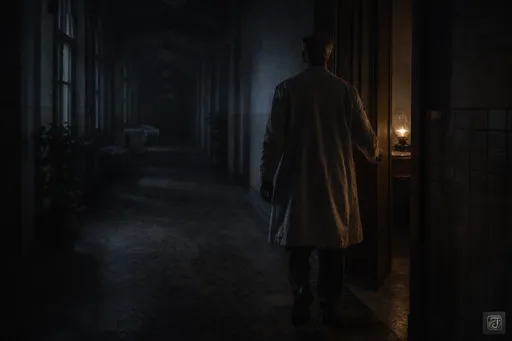
The ward is quiet.
Yet within that silence, a new possibility has taken shape.
Whether it is salvation or a gamble—
No one yet knows.
Chapter 6: The Cost of Heat
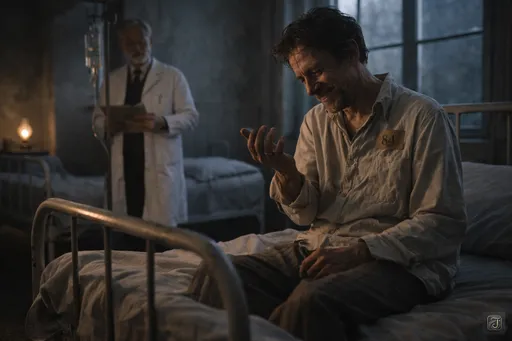
The next patient was a former teacher.
In his forties.
His name was written in the chart, but in the ward he was often called by a number.
General paresis.
Four years since onset.
His speech was disordered, his gait unsteady. At times, he would stare at his own hands and laugh as though they belonged to someone else.
Yet his body had not yet wasted away.
His heart and lungs, at least on paper, were considered “capable of enduring.”
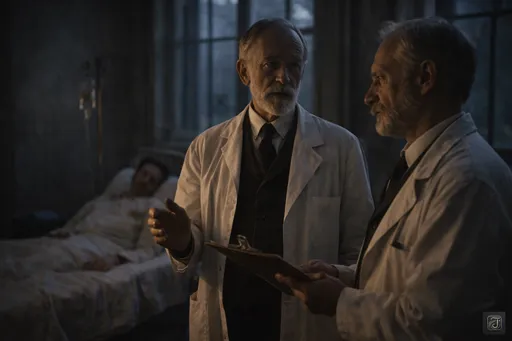
“There is Josef’s case,”
The senior physician said.
“If we do not observe the next, it will never become statistics.”
Wagner nodded.
It was neither agreement nor endorsement.
Only a sign that there was no path but forward.
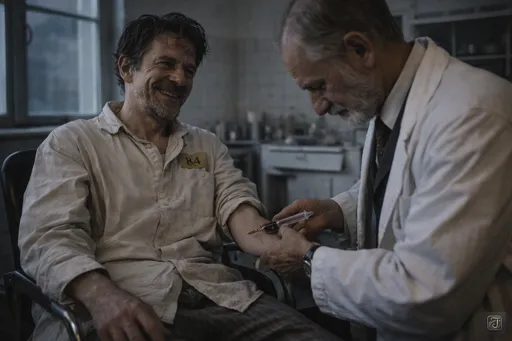
The procedure room.
White walls. Metal instruments.
The window half open.
The teacher sat in a chair, a fixed smile at the corner of his mouth.
“Doctor, is there a lesson today?”
“It is an examination.”
“Then I must be an excellent student. Will I graduate?”
Wagner did not answer.
There were no words in that room that could answer.
The needle entered the skin.
The drawn blood filled the syringe.
The teacher scarcely reacted.
But the moment the injection was finished, he spoke abruptly.
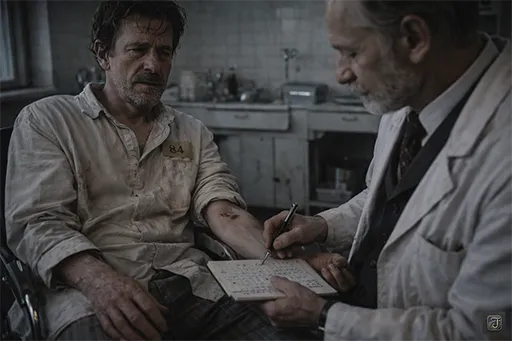
“Will my wife come to take me home?”
Wagner did not pause.
He wrote the date in the record.
Observation begins.
The following day.
Chills.
Temperature: 38°C.
Second day.
39°C.
Third day.
40°C.
Sweat soaked the bedding, his pulse raced.
The teacher writhed on the bed.
Words lost their meaning, leaving only sound.
A nurse walking down the corridor paused for a moment.
There was the smell of heat—
that faintly sweet scent when a human body approaches its limit.
Wagner checked the thermometer and copied the numbers.
40.2.
40.5.
A colleague spoke in a low voice.
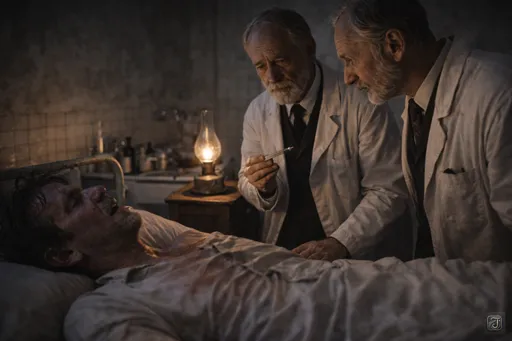
“We should administer quinine soon.”
“After we confirm the cycle.”
“He’ll die while you’re confirming it.”
The words were not a threat.
They were experience.
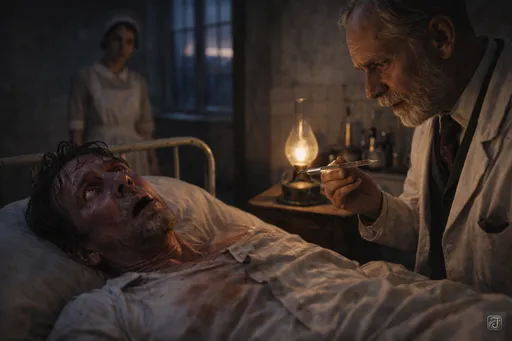
Fourth day.
The fever dropped once.
That was the danger.
The body grew quiet.
His breathing appeared to steady.
A nurse almost said, “Perhaps he has passed the worst.”
But by evening, the fever surged again.
41°C.
The number looked abnormal on the page—
enough to make one suspect the thermometer was broken.
But it was not the thermometer that was failing.
The teacher’s eyes trembled from side to side.
His lips were dry, his tongue white.
His breathing was rapid and shallow.
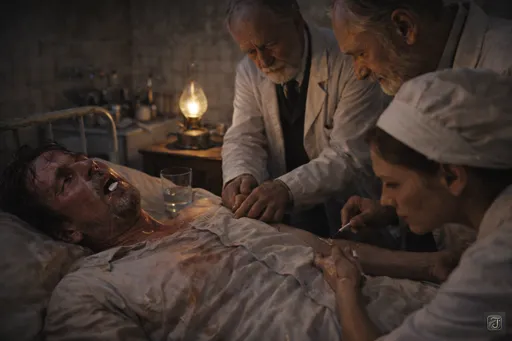
Wagner took his pulse.
Thin. Rapid.
Blood did not return to the fingertips.
“Quinine,”
The senior physician said.
Wagner nodded.
A white tablet was placed in his mouth with water.
The teacher could not swallow.
His throat would not move.
Water spilled from the corner of his lips and soaked the pillow.
“An infusion.”
The nurse secured his arm.
She tried to insert the needle.
The veins were rigid, retreating.
The heat had dried the skin; the veins had sunk deep.
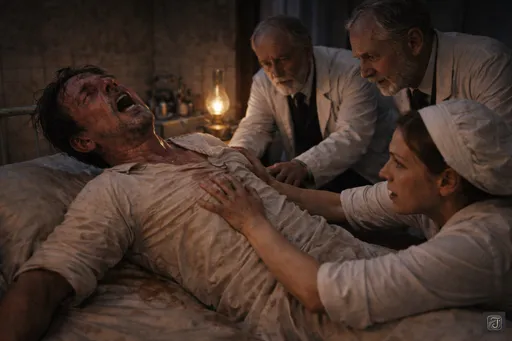
The teacher suddenly sat upright.
His eyes were unfocused.
But his voice was clear.
“I must stand at the lectern.”
It was not a delusion.
It was a remnant—
the shadow of a profession, the last thing left of his life.
The next instant, his body jerked.
A convulsion.
His arms and legs stiffened, his back arched.
His teeth clenched, a sound forced from his throat.
The nurse tried to hold him down.
But it was not a strength that could be restrained.
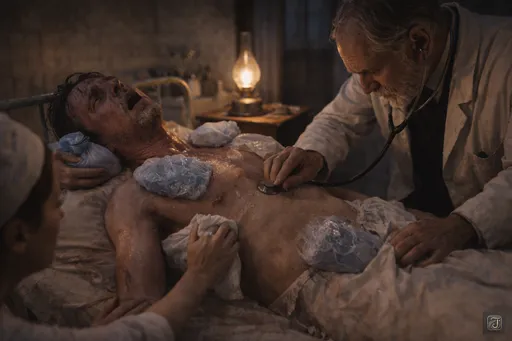
“Cool him.”
Someone said.
Ice packs. Wet cloths.
Under the arms, at the neck, in the groin.
The places to cool were well known.
But the heat seemed to rise again from beneath the cloth.
The convulsion stopped once, and his breathing became irregular.
The sound of inhalation caught, as if snagged.
Wagner pressed the stethoscope to his chest.
The heartbeat skipped.
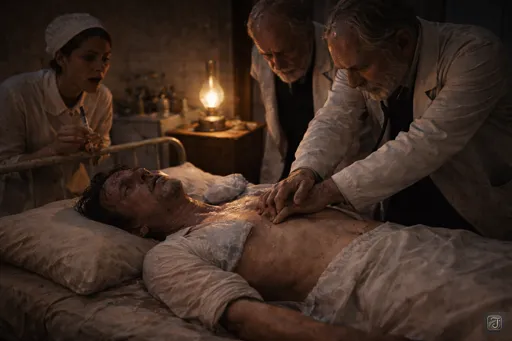
“Adrenaline.”
The order was given.
The nurse moved.
A needle pierced the skin.
The drug entered.
The teacher’s chest rose faintly.
For a moment, it seemed he had returned.
Then, the next instant, his breathing stopped.
The sound drained from the room.
Only the ticking of the clock remained.
Someone began chest compressions.
A steady rhythm.
Bones creaking.
Wagner realized—
This was not the sound of healing.
It was the sound of breaking.
Minutes passed.
Ten.
Time moved on without numbers being written.
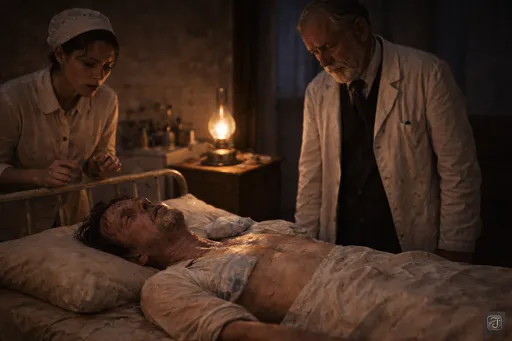
At last, the senior physician spoke.
“…Stop.”
The word was brief.
It ended everything.
The nurse withdrew her hands.
Her hair clung to her forehead with sweat.
The teacher’s face was strikingly calm.
No anger. No fear.
Only the heat remained,
The residual warmth of his body seeping into the sheets.
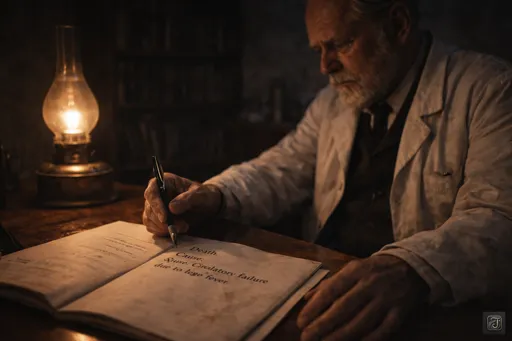
Wagner opened the chart.
Deceased.
Cause: circulatory failure associated with high fever.
As he wrote it, his hand paused for a moment.
It was not the pen that had stopped.
It was something within him.
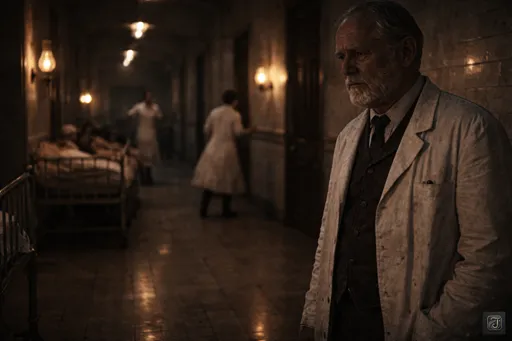
When he stepped into the corridor, the ward was as it always was.
Shouts. Footsteps. The clatter of metal.
People raved, people slept, people unraveled.
That was the routine.
But just for that moment, the outline of the world seemed slightly out of place.
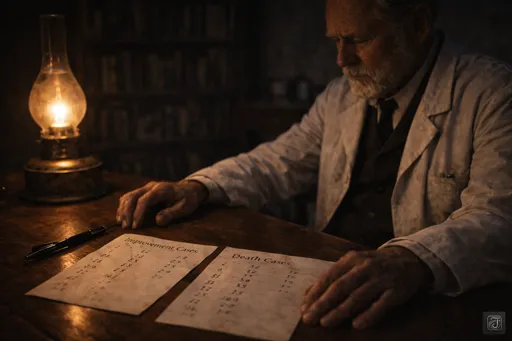
Night.
The laboratory desk.
Lamp light.
Numbers on paper.
One case of improvement.
One case of death.
Placed side by side, both are “one.”
In statistics, they become equal.
But they cannot be equal.
Wagner set down his pen.
And said quietly,
“Is this treatment?
Or another form of killing?”
No answer came.
Only the next case would.
Chapter 7: The Sleepless Night
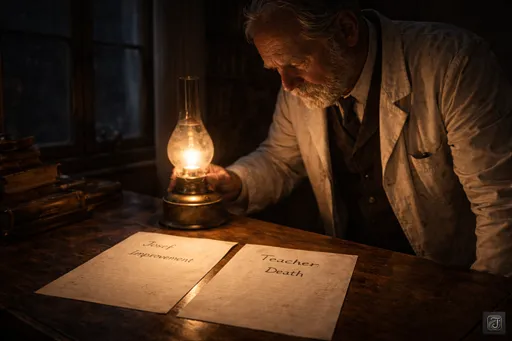
That night, he did not go home.
The laboratory window was closed.
Outside, the chill of autumn.
Inside, it still felt as though the heat of the day lingered.
Two charts lay side by side on the desk.
Josef.
Improvement.
The teacher.
Death.
On paper, both were written in the same ink.
He drew the lamp closer.
The outlines of the letters darkened.
Improvement.
Death.
Both were facts.
Both had passed through his hands.
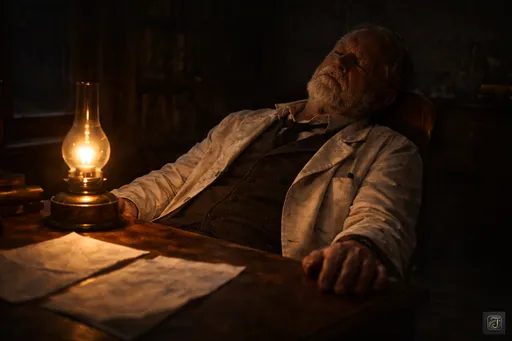
He leaned back in his chair and closed his eyes.
The teacher’s convulsions returned to him.
The arching spine. The sound of the jaw snapping shut.
The impact of chest compressions.
In that moment—
What had he been doing?
Trying to save him?
Or trying to prove something?
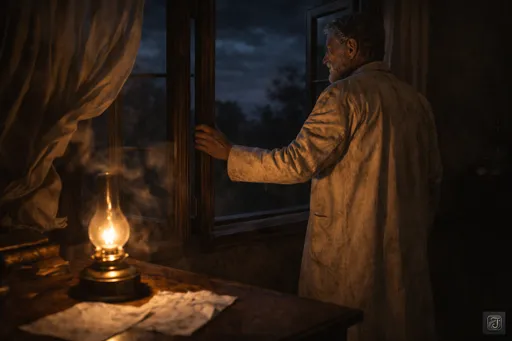
He stood and opened the window.
Night air entered, and the lamp flame trembled.
“Better than doing nothing.”
He had said that earlier in the day.
But was it?
Had nothing been done, the teacher might have died years later—
But not today.
Had he merely hastened the end?

From deep in the corridor, someone screamed—
a patient with general paresis.
Words without meaning.
A personality undone.
That is the future one reaches with certainty if left untouched.
He placed both hands on the desk.
He recalled the statistics.
Rate of improvement.
Rate of death.
Numbers do not lie.
But numbers have no face.
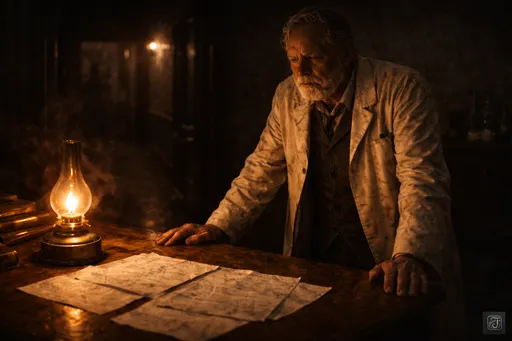
The teacher’s wife does not yet know.
She will be called tomorrow.
What will he say then?
“I did everything I could.”
That would be true.
But what is “everything”?
As long as there are successful cases,
He cannot abandon the method.
To stop would be to extinguish the possibility of improvement with his own hands.
To continue may mean that someone else will die.
Both are right.
Both are cruel.
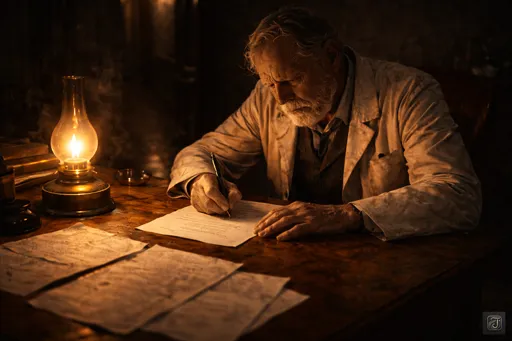
He returned to his chair and picked up the pen.
He drew out a fresh sheet of paper.
“Observations on Fever Therapy”
He wrote at the top.
Beneath it, he added:
One fatal case.
Circulatory failure due to high fever.
Henceforth, stricter monitoring of fever cycles
and reconsideration of the criteria for early quinine administration.
As he wrote, he realized something.
The doubt did not disappear.
But the moment doubt was turned into record,
It became a method.
He set down his pen.
The night was still deep.
Wind sounded beyond the window.
He murmured softly.
“Am I right?”
No answer came.
But tomorrow, more patients would arrive.
That fact alone kept him seated in the chair.
He extinguished the lamp.
In the darkness,
For the first time, he noticed that he was trembling.
Chapter 8: Recognition
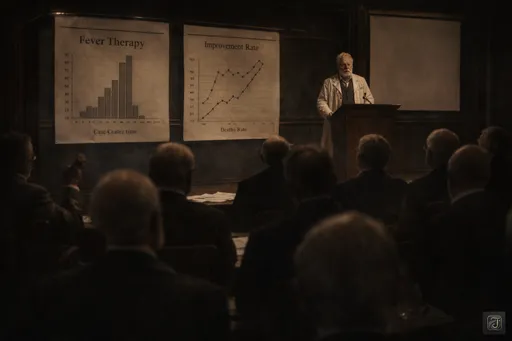
By the 1920s, fever therapy was being carried out in multiple institutions.
The number of cases increased, and the statistics grew more refined.
Not every patient improved.
There were deaths from high fever.
Relapses were reported as well.
And yet, for the disease known as general paresis,
no other treatment demonstrated a measurable rate of improvement.
Debate continued in academic circles.
Risk. Ethics. Reproducibility.
Criticism did not disappear.
But neither did the results.
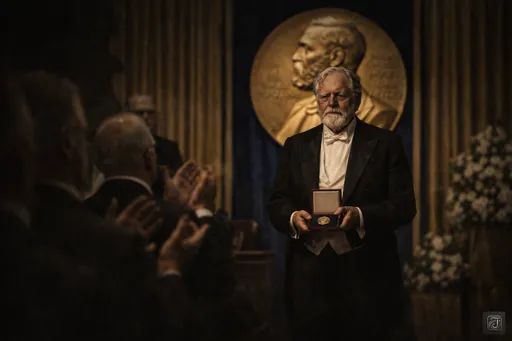
December 1927, Stockholm.
The Nobel Prize in Physiology or Medicine
was awarded to Julius Wagner-Jauregg.
Amid the applause, he remembered the face of one teacher.
The citation was brief:
The establishment of fever therapy for general paresis.
It was the moment a single treatment received international recognition.
The applause ended with the ceremony.
What remained were papers, case reports, and statistics.
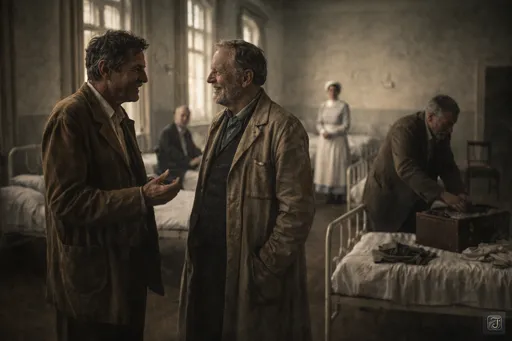
The landscape of the psychiatric ward had changed.
Some patients who once would have deteriorated without exception
began to recover speech and leave the hospital.
It was not a complete solution.
But it was no longer a state of helplessness.
That was the place this treatment came to occupy.
Epilogue: Afterward
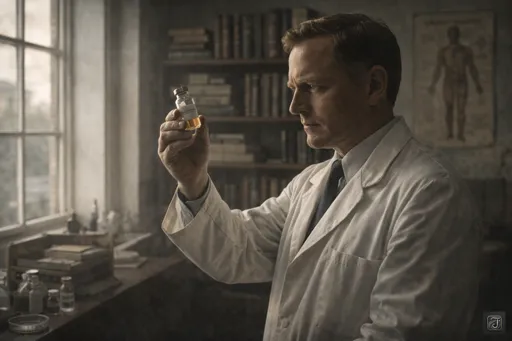
The 1940s.
Penicillin entered clinical practice.
Syphilis became an infection treatable with antibiotics.
When treated early,
its progression to neurosyphilis could be prevented.
General paresis became a preventable disease.
Fever therapy gradually fell out of use.
The deliberate induction of malaria infection
remained in the records as a historical method.
And yet, in the early twentieth century,
no other proven effective treatment existed.

Medicine is always provisional.
What is considered the best method in one era
is replaced in the next.
Records are revised.
But before revision,
there are decisions and attempts.
Fever therapy was an answer
belonging to its time.
He simply refused the treatment of doing nothing.
Author’s Afterword

Why did I choose to write about Julius Wagner?
Not because he was a “right” physician.
He was a physician who refused the choice of doing nothing.
Fever therapy was dangerous.
Patients did, in fact, lose their lives.
From a modern perspective, its ethical implications are open to serious debate.
And yet, in the psychiatric wards of that time,
patients were steadily, inevitably collapsing.
In an era when sedation and restraint were the only options,
he attempted a different possibility.
Was it salvation, or was it a gamble?
I did not want to provide that answer.
Medicine is always provisional.
What is considered the best in one era is revised in the next.
But before revision,
there is doubt—and there is a decision.
This story is not a record of success.
It is a portrayal of that doubt.
Author: Fuji

Human history is truly complex, isn’t it?
There are countless websites introducing historical figures and events, but many of them are just plain explanations—not exactly exciting to read.
On the other hand, reading books takes a lot of time and effort.
That’s where I come in.
Through “stories that are more engaging than explanations and shorter than books,” I aim to bring the world’s history and humanity’s records to you in a more accessible and interesting way.
If my stories inspire you to love history a little more, I’d be absolutely thrilled!
If you found this article helpful or enjoyable, please consider supporting me with a cup of coffee!👈Click☕🙏
I’m a passionate blogger who loves diving deep into human history and sharing captivating stories about remarkable figures and events from the past.
My blog combines engaging storytelling with beautiful illustrations, making history accessible and enjoyable for everyone.
Currently, I write my blog while managing a full-time job.
Balancing both limits the time I can dedicate to research, writing, and illustrations.
With your support on Ko-fi, I can reduce the time spent on my main job and focus more on blogging, allowing me to increase the frequency of updates and bring you even more captivating stories.
Whether it’s a one-time coffee or a regular contribution, every bit goes directly into making history engaging and fun for my readers.
Thank you for joining me on this journey through time. Let’s uncover the past together!
If you found this article insightful, please consider supporting me ona cup of coffee!👈Click☕🙏

Comment